
Loading...
Serving Tulare, CA and surrounding areas. (559) 837-6805
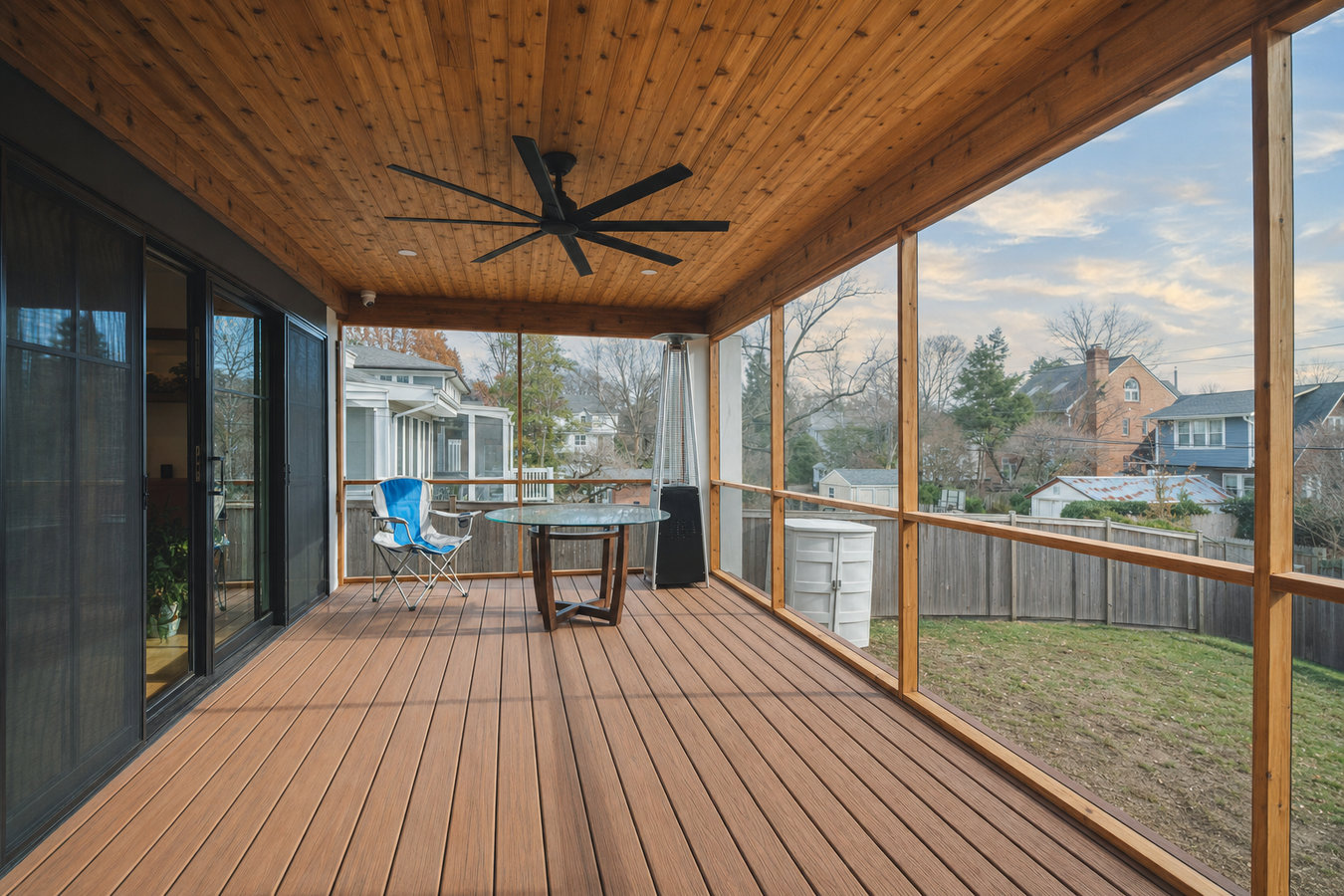
Tulare summers keep most people inside. A screened porch gives you a shaded, bug-free outdoor space you can actually use from spring through fall.
Screened-in porches and screened decks in Tulare give you an outdoor living space enclosed with mesh screening on the sides, so you get fresh air without the bugs, dust, or direct afternoon sun - most projects take three to seven days of active construction once permits are approved and materials are on-site.
A lot of Tulare homeowners tell us they stop using their deck by May. The heat arrives early in the San Joaquin Valley, and the insect pressure from nearby irrigation canals and farm fields makes evening time outside miserable without some kind of enclosure. A screened porch changes that. You get the airflow of being outside with none of the things that drive you back in. If your existing deck needs structural work before an enclosure goes on, we can address that as part of the same project with our covered decks and patio covers expertise or a full deck repair before we build.
We handle the City of Tulare permit process from start to finish, check HOA guidelines before any materials are ordered, and select screening materials that hold up to Central Valley UV and insect conditions. You should not have to manage any of that - we do it so the finished project is fully permitted, HOA-compliant, and ready to use.
If your deck sits unused from May through September because it is too hot, too buggy, or both, that is the clearest sign a screened enclosure would change how you live. In Tulare, where triple-digit days start in June, an unshaded open deck is genuinely uncomfortable for most of the year. A screened porch with a solid roof and a fan turns that same space into somewhere you want to spend time.
If you light citronella candles, spray yourself down, or just give up and go inside after dark, insects are stealing your outdoor time. Tulare's proximity to irrigation canals and agricultural fields means mosquito and gnat pressure is higher here than in many California cities. A properly screened enclosure with tight-weave mesh eliminates that problem without chemicals or constant effort.
If you have a deck that is structurally sound but rarely gets used - maybe it gets too dirty from agricultural dust, or it never became the gathering spot you imagined - adding a screen enclosure can transform it without starting from scratch. You are not throwing away what you already have; you are finishing it.
In Tulare's housing market, usable outdoor living space is a genuine differentiator. If your home currently has an open deck that looks like every other house on the block, a screened porch gives buyers something to picture themselves using - and that mental image matters when they are deciding between two similar homes in a similar price range.
We build screened enclosures on existing decks and on new platforms we construct from scratch. If you already have a solid deck, we assess the framing and ledger board first - the money you save by building on top of existing structure is real, and we will tell you honestly if it is worth it or if the deck needs work before we add on. For homeowners who want a shaded roof as well as screening, we incorporate solid or shade-cloth roof panels as part of the same build. If you are also considering a fully open shade structure, our pergola installation service is a good comparison point - a pergola gives you shade without the bug protection, while a screened porch gives you both.
Every screened enclosure we build uses framing-grade pressure-treated lumber for the posts and beams, which handles both Tulare's summer heat and the seasonal moisture from Tule fog winters. Screening options include standard fiberglass mesh, tighter-weave no-see-um mesh for properties near irrigation canals or farm fields, and aluminum mesh for high-traffic areas where durability matters most. Doors are properly hung and latched so they do not stick or gap - a detail that separates a well-built enclosure from a cheap one.
Best for homeowners who already have a solid deck and want to add screening and a roof without rebuilding from the ground up.
Suits homeowners who want to start fresh or who need a new deck surface built as part of the enclosure project.
Ideal for Tulare properties facing west or south, where afternoon shade matters as much as bug protection for year-round comfort.
Tulare sits in the southern San Joaquin Valley, where summer temperatures regularly exceed 100 degrees and the insect population near irrigation canals and agricultural fields is genuinely intense. A screened porch is useful here in a way it might not be in a city environment. The screening we specify for Tulare properties is tighter-weave than the standard option - it blocks the smallest insects, including gnats that come off nearby fields during harvest season, without cutting off airflow. The framing materials we use are chosen for the climate as well: pressure-treated lumber that handles both the summer heat and the seasonal moisture that comes with Tule fog from November through February. Homeowners in Visalia face the same Valley conditions and have been through the same seasonal patterns - our builds there hold up for the same reasons.
Permitting is a genuine local factor. The City of Tulare requires a building permit for any structural addition to your home, including a screened porch. The inspection process means a city inspector checks the framing before screening goes on - which catches problems before they are hidden. We manage the full permit process and stay in contact with the city on your behalf. Many of Tulare's newer subdivisions - especially on the north and east sides - also have HOA rules about outdoor additions. We check those guidelines before we finalize any design, so the finished project clears all approvals the first time. Homeowners in Porterville go through a similar permit process, and we handle that in the same organized way.
We reply within one business day to schedule an on-site visit. You describe what you are hoping to use the space for - bug-free evenings, a place for kids to play outside, or a cooler spot during summer. We take it from there.
We come to your home, measure the space, and look at your existing deck or the area where you want to build. We check how the afternoon sun hits, whether there are HOA restrictions, and what screening type makes sense for your location. You get a written estimate - no vague ballpark ranges.
Once you approve the estimate and sign a contract, we submit the permit application to the City of Tulare. While the city reviews it - typically one to three weeks - materials are ordered so the crew can start immediately once the permit clears.
The crew frames the enclosure, the city inspector checks the framing, then the screening is stretched and fastened. Doors are hung and adjusted. We do a walkthrough with you before the final city inspection closes the permit. The finished porch is ready to use immediately.
Free written estimate. We handle permits, HOA review, and scheduling - no runaround.
(559) 837-6805We specify tighter-weave screening options for Central Valley properties, not the standard mesh that lets in gnats and small mosquitoes. If your property is near irrigation canals or farm fields, we will tell you exactly which mesh grade makes sense and why. That specificity is something most out-of-area contractors skip entirely.
We submit the City of Tulare permit application, schedule the framing inspection, and handle all city communication - you never have to call the Building and Safety Division yourself. A completed permit file is handed to you at project close, so your records are clean when it comes time to sell.
Tulare's newer subdivisions on the north and east sides often have active HOAs with specific rules about outdoor structures. We review your HOA's design guidelines as part of the estimate process, not after the fact. That means the finished porch meets their requirements the first time - no revision letters or rework.
The San Joaquin Valley combination of intense summer UV, dry heat, and Tule fog winters is hard on framing that was not selected with those conditions in mind. We use pressure-treated lumber and exterior-rated hardware on every build because it lasts significantly longer here than standard materials. The North American Deck and Railing Association publishes best-practice guidance on materials for exactly these climate conditions.
Every screened porch we build comes with a clear written scope, a city-approved permit, and materials chosen for this specific climate. When the project is done, you have a fully permitted structure that adds real value to your home and makes your backyard livable for the first time.
Add a permanent roof structure over your outdoor space for shade and weather protection without full enclosure screening.
Learn MoreAn open pergola frame creates shade and defines your outdoor living area when you want structure without full enclosure.
Learn MoreSpring booking slots fill quickly - reach out now for a free on-site estimate and lock in your build date before peak season.