Loading...
Serving Tulare, CA and surrounding areas. (559) 837-6805
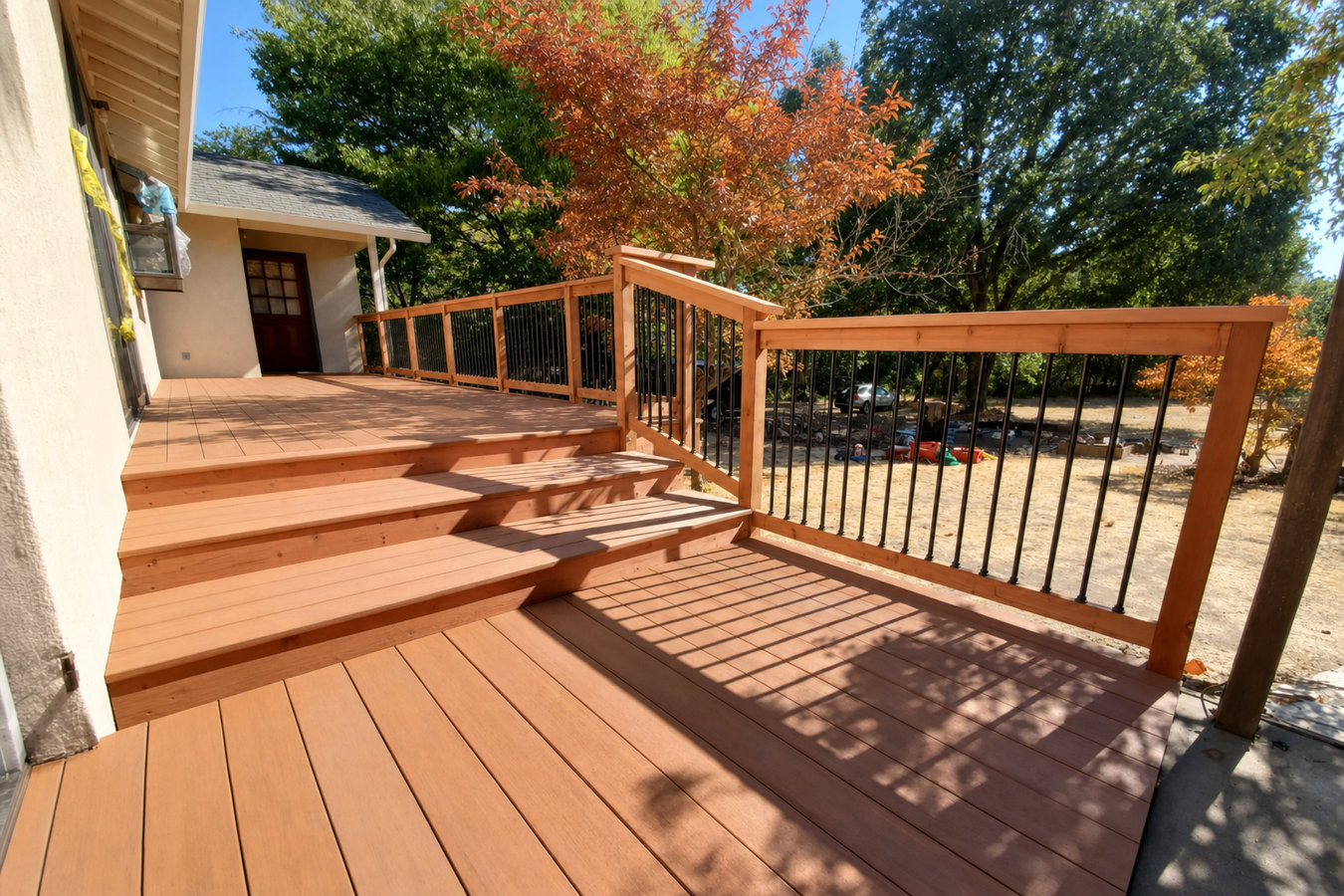
A wobbly railing or no railing at all is a safety problem, not just a cosmetic one. We install deck railings in Tulare that pass city inspection and hold up through years of Valley heat.
Deck railing installation in Tulare, CA involves setting posts, attaching rails, and spacing balusters to California safety requirements - most standard deck railing projects are completed within one to two days of active work once materials are on-site and permits are approved.
A railing is not just a finishing touch. In California, any deck that sits 30 inches or more above the ground is required to have one - and many older Tulare homes have decks that were built before current safety standards were in place. Whether you are starting fresh on a new deck, replacing a railing that has deteriorated after years of Valley heat and agricultural dust, or bringing an older structure up to current requirements, the installation process follows the same steps. Before attaching anything, we check the condition of the deck frame - a railing is only as safe as what it is bolted to. For homeowners dealing with older decks that need more than just new railings, our deck repair and replacement service can address the underlying structure first.
The City of Tulare requires a building permit for railing installation on elevated decks. We handle the permit application and coordinate the final inspection so everything is properly on record when the job is done.
Stand at the edge of your deck, grip the top rail firmly, and push sideways. If it moves at all - even slightly - the posts or their connections to the deck frame have loosened or deteriorated. This is a safety issue, not a cosmetic one, and it should be addressed before anyone uses the deck regularly.
Tulare's intense summer heat and dry conditions cause untreated or aging wood to crack and splinter faster than in cooler climates. Run your hand along the top rail and check the post bases - if the wood feels soft, punky, or crumbles when you press it, rot has set in and the railing has lost its structural integrity.
If you see white or chalky deposits forming around the base of metal posts or along cable connections, that is mineral buildup from Tulare's hard water. Left alone, it traps moisture against the metal and speeds up corrosion - and once the fasteners start to rust through, the whole post connection weakens.
Some older Tulare homes have decks built before current safety rules were in place, with no railing even though the deck sits well above the ground. If your deck is more than two and a half feet off the ground and has open sides, you are likely out of compliance with current California requirements - and it is a genuine fall hazard for children and guests.
We install wood, aluminum, vinyl, composite, and cable railings - and we match the material recommendation to what actually holds up in Tulare's climate. Every installation covers the full scope: setting and securing the posts, attaching the top and bottom rails, spacing and installing the balusters, and finishing with hardware that is suited to the Valley's heat and mineral-heavy water supply. For homeowners building a new deck at the same time, pairing this work with our custom deck design and build service means the railing and the structure are planned and built together so nothing has to be retrofitted later.
Before any railing goes in, we inspect the existing deck frame. On older Tulare homes - a significant portion of the city's housing stock dates from the 1960s through the 1980s - the framing underneath can have issues that are not visible from the surface. A railing installed on a compromised frame is not actually safe, regardless of how solid it feels on the day it goes in. If repairs are needed, we tell you upfront and walk you through the options before anything else is ordered or installed.
The most heat-stable option for Tulare's summers - powder-coated finishes resist fading, and the material does not warp or crack under prolonged UV exposure the way wood or some vinyl products can.
A classic look that can be painted or stained to match your deck, suited to homeowners who are comfortable with periodic refinishing to maintain the surface in the Valley's dry heat.
Low maintenance and easy to clean, with a range of profile styles available - best suited to shaded or partially shaded decks where sustained extreme heat is less of a factor.
A middle-ground option that blends wood-look aesthetics with better resistance to rot, moisture, and UV exposure - a strong performer in the San Joaquin Valley climate.
Horizontal stainless steel cables for an open, modern look - popular on decks with a view, though cables require periodic re-tensioning and regular wipe-downs to prevent mineral buildup in hard-water areas like Tulare.
Tulare's water supply is notably high in dissolved minerals, and that hard water leaves calcium deposits on metal surfaces over time. For aluminum or cable railings, mineral buildup around fasteners and post bases traps moisture and accelerates corrosion from the inside out - a problem that is not visible on the surface until it is already well advanced. Choosing a powder-coated or anodized finish rather than bare metal, and committing to a simple annual rinse, makes a real difference in how long an installation lasts here. A contractor who works in the San Joaquin Valley will factor this into their material recommendations without you having to ask. Homeowners in Visalia deal with the same hard-water conditions and benefit from the same material guidance.
The heat itself is the other major local factor. Tulare regularly sees summer temperatures above 100 degrees, and certain vinyl railing products can warp or fade faster under sustained extreme heat than they would in a milder part of California. Agricultural dust from the surrounding Valley also settles into railing joints and post channels, trapping moisture and accelerating wear on materials that have tight crevices or unsealed ends. Homeowners in Hanford and throughout the Central Valley face the same climate conditions, and the same material choices apply. We work in this climate every day and have seen which products perform and which ones do not.
When you reach out, we ask a few basic questions - how long the railing run is, how high the deck sits, and whether you have an existing railing being replaced or are starting fresh. We schedule a free on-site visit, measure accurately, and assess the deck frame condition before giving you a written quote. We reply within one business day.
For elevated decks in Tulare, we submit a permit application to the City of Tulare Building Division before any work begins. While the permit is being reviewed - typically a few business days to two weeks - you confirm your material choice and we order what is needed. We give you a realistic start date once materials are confirmed.
The crew arrives, removes any existing railing, and sets and secures the posts first - the most critical part of the job. Top and bottom rails attach next, then balusters or infill panels. For an average deck, most installations are complete within one full day. Larger or more complex projects may run into a second day.
After installation, we schedule the final inspection with the City of Tulare Building Division. An inspector confirms the railing meets height, spacing, and structural requirements. Once it passes, we walk you through the finished railing, cover any maintenance steps specific to your material, and hand over any warranty documentation.
Written estimate, permit handled, city inspection included. Most projects start within two weeks of your signed contract.
(559) 837-6805We check the ledger board, joists, and existing post connections before attaching any new railing. A significant share of Tulare's housing stock dates from the 1960s through the 1980s, and deck framing from that era can have deterioration that is not obvious from the surface. If repairs are needed, we tell you upfront.
We recommend finishes and hardware specifically suited to Tulare's combination of extreme summer heat and high-mineral water supply. The goal is a railing that holds its structural integrity and appearance for years - not one that starts corroding or fading within a few seasons.
We handle the permit application, coordinate the final inspection, and confirm everything is signed off before the job is closed. An unpermitted railing can surface as a problem when you sell your home or file an insurance claim - we make sure that never happens on a project we touch.
You get a written, itemized quote before we start. If something unexpected comes up during the job - like a deck frame issue that needs to be addressed before the railing can be safely anchored - we stop and talk to you before proceeding. The number you agreed to is the number you pay unless scope changes with your approval.
A properly installed railing should feel completely solid when you grab it and apply pressure - no flex, no give. The North American Deck and Railing Association sets installation best practices we follow on every project, and the California Contractors State License Board is where you can verify that any contractor you hire holds a current, valid license before work begins.
Planning a new deck from scratch? We design and build the full structure - platform, stairs, and railing - as one integrated project rather than separate phases.
Learn MoreIf the deck frame underneath needs attention before a new railing can be safely installed, we handle structural repairs and board replacement alongside the railing work.
Learn MorePermit-ready crews serving Tulare and the surrounding Valley - call or request a free estimate and most projects start within two weeks of your signed contract.