
Loading...
Serving Tulare, CA and surrounding areas. (559) 837-6805
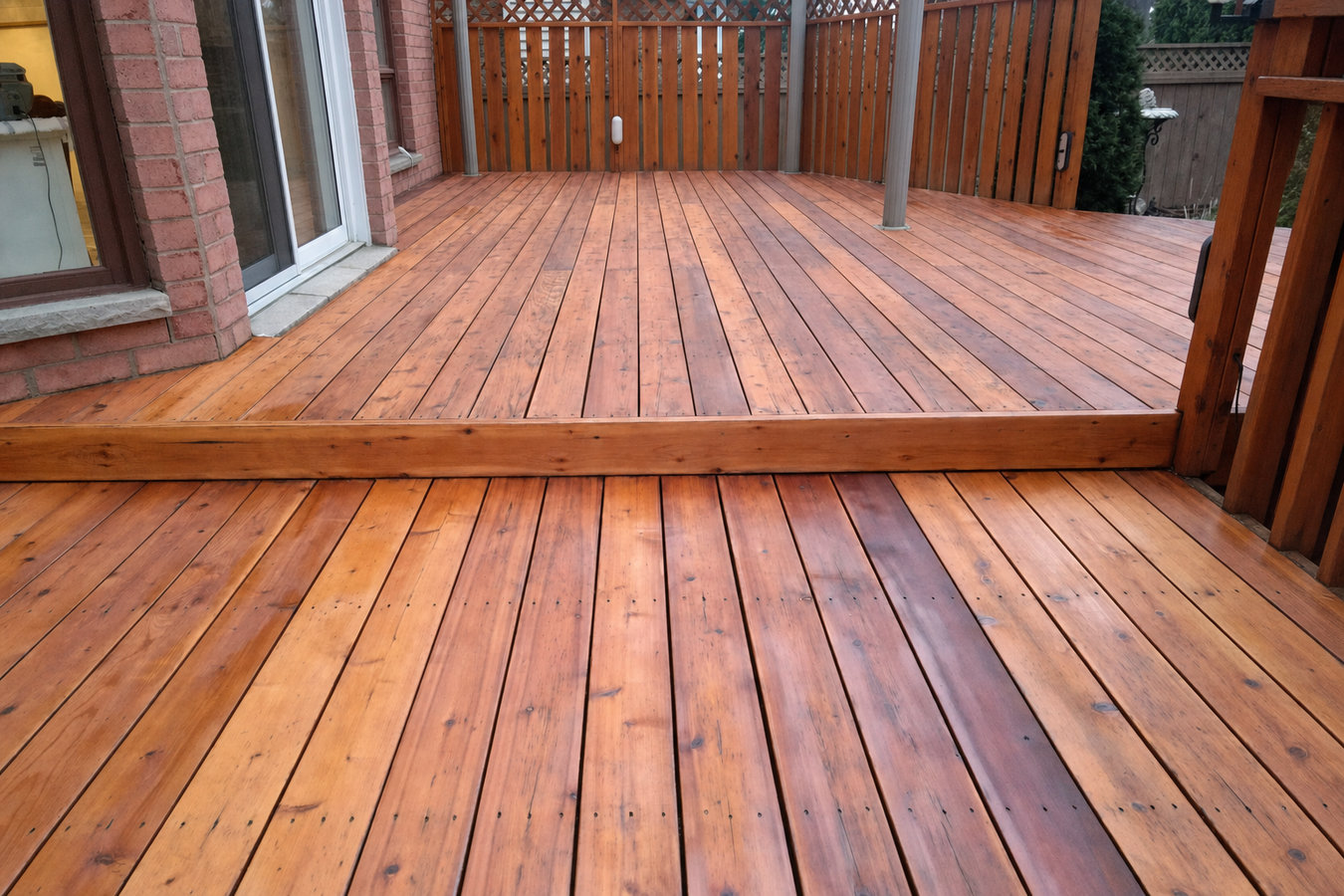
Intense Valley sun and winter fog break down unprotected deck wood fast - the right stain and seal job keeps your deck looking good and lasting longer.
Intense Valley sun and winter fog break down unprotected deck wood fast - the right stain and seal job keeps your deck looking good and lasting longer.
Deck staining and sealing in Tulare, CA involves cleaning the surface, treating any mold, and applying a protective stain that soaks into the wood, with most residential decks completed within one to two days once the prep work is done.
Staining adds color and soaks into the wood to protect it from the inside out, while the sealer puts a protective layer on top that keeps water from absorbing into the grain. Together, they slow the natural aging process that causes wood to crack, splinter, and turn gray. In Tulare, where summer UV exposure and the wet-dry seasonal cycle are both harder on wood than in most other parts of California, staying on a regular staining schedule is one of the most cost-effective ways to protect your deck. If your deck has boards that are already cracked or damaged beyond what staining can fix, our deck repair and replacement service covers what to do before staining makes sense.
The single biggest factor in how long a stain job lasts is preparation - how well the surface was cleaned and dried before anything was applied. We walk your deck before quoting anything, so you know exactly what the job involves and what the final number will be before any work begins.
When deck wood loses its warm brown tone and looks gray or silver, the protective finish has worn away and the sun has been bleaching the raw wood. In Tulare's intense summer sun, this can happen faster than homeowners expect - sometimes within a single season on a deck that was not sealed properly. Once the gray color starts spreading, it is time to act before the wood begins cracking.
Splash a small cup of water on your deck boards. If the water soaks in quickly and darkens the wood, the sealer is gone and the wood is unprotected. If water beads up into little droplets and rolls off, you still have protection left. This test takes about 30 seconds and tells you more than looking at the surface alone.
When boards crack along the grain or splinter underfoot, the wood has dried out and is starting to break down. Tulare's dry summer heat accelerates this process, especially on south- or west-facing decks that get full afternoon sun. Catching it at the cracking stage means staining can still help - waiting until boards are deeply split means replacement.
Dark spots or a greenish cast on your deck boards are signs of mold or mildew growth, which is especially common on Tulare decks after tule fog season. Mold breaks down wood fibers over time and can make the surface slippery. A contractor needs to clean and treat those areas before staining - but catching it early means the damage is still surface-level.
Every job starts with a proper wash-down to remove dirt, mold, and any old flaking finish - because in Tulare, agricultural dust from Tulare County fields settles into deck wood grain and will prevent a new stain from bonding if it is not cleared first. We treat any mold or mildew before applying the stain so the protection goes on over clean wood, not over a layer that will push back through by the next fog season. For homeowners building or rebuilding a deck, our pool deck construction service is one example of a project where staining comes in as a final protection step after the structure is complete.
Product selection matters for Tulare's climate. We recommend products rated for high-UV environments because the San Joaquin Valley sun is harder on stain films than in many other parts of California. A semi-transparent stain gives you color protection while still letting the wood grain show through - which tends to look the best and hold up well over multiple treatment cycles. The U.S. Forest Service Forest Products Laboratory publishes research on wood finishing that guides best practices for surface preparation and product selection on residential decks.
Right for homeowners who want a thorough professional wash-down and inspection before deciding on a product - good starting point if the deck has been neglected for a few years.
Best for homeowners who want color protection while keeping the natural wood grain visible - the most popular option for residential decks in the Tulare area.
Suited for homeowners who want to preserve the natural wood look with no added color - protects against water absorption without changing the deck's appearance.
A good choice for older decks with inconsistent color or boards that look weathered - solid stain covers the surface more completely and hides imperfections while still protecting the wood.
Tulare sits in the southern San Joaquin Valley, where summer temperatures regularly climb above 100 degrees Fahrenheit and UV exposure is extreme. That kind of sun breaks down deck stain faster than in cooler climates, which means your deck may need refreshing every one to two years rather than the two to three years typical in milder parts of the state. On top of that, the Valley's wet-dry seasonal cycle - hot, dry summers followed by a rainy season from November through March - causes wood to expand and contract repeatedly, which stresses the stain film and opens up cracks faster than in places with more even rainfall. Homeowners in Visalia and across the surrounding Valley deal with the same climate conditions, which is why we use products rated for high-UV environments on every job in this region.
Tulare County is one of the most productive agricultural counties in the country, and that means fine dust, pollen, and airborne residue are part of the environment year-round. This residue settles into deck wood and interferes with how well a stain bonds if the surface is not thoroughly cleaned first - a prep step that is not optional here the way it might be in a suburban area with less airborne particulate. Our crews also watch for the effects of tule fog, the dense ground fog that settles across the San Joaquin Valley from late fall through winter. If your deck has been sitting through several fog seasons without fresh protection, mold and mildew growth is likely - and we treat the surface before sealing it, not after. Homeowners in Porterville and the surrounding foothill communities deal with slightly different moisture patterns but the same need for thorough prep before any stain goes down.
We ask a few basic questions - the size of your deck, how old it is, and whether you know when it was last stained. We respond within one business day and schedule a time to walk the deck in person before giving you a firm price.
We walk your deck, check the condition of the boards, examine any mold or damage, and tell you honestly if any boards need to be replaced before staining makes sense. You get a written quote that breaks out what is included - cleaning, prep, and the staining itself - with no surprises.
The crew washes the deck thoroughly to remove dirt, mold, and old flaking finish. In Tulare, this step takes extra attention because of agricultural dust that settles into the wood grain. After washing, the wood needs to dry completely before stain goes on - often done the day before or in the morning before afternoon application.
Once the wood is clean and dry, the stain goes on by brush, roller, or sprayer - methodically across the boards to keep the color even. Most residential decks in Tulare can be stained in a single day. Before we leave, we walk the completed deck with you and tell you exactly when it is safe for furniture and foot traffic.
Free written estimate. We walk the deck with you before quoting anything.
(559) 837-6805We walk your deck in person before we give you a price. That means you know exactly what the job involves, what the wood's condition is, and what the final number will be before anyone picks up a brush. No low quote upfront, no add-ons once we arrive.
Most stain products are tested for average conditions. Tulare's summer sun is not average. We specifically select products rated for high-UV environments, which means you get closer to the full two-year protection window rather than watching the finish fade by next summer. The U.S. Forest Service Forest Products Laboratory research on wood finishing backs up this approach.
Tulare County's farming environment means fine dust and airborne residue settle into deck wood year-round. We treat this as a non-negotiable prep step, not an optional add-on. Stain applied over dirty wood fails early - every time.
Tule fog season in Tulare creates reliable mold and mildew conditions on deck surfaces. We treat any mold before the stain goes on, so the protection bonds to clean wood and does not push back through after the next fog season. The North American Deck and Railing Association recognizes proper pre-treatment as a core best practice for deck maintenance.
Every one of these details adds up to a stain job that actually lasts in Tulare's climate, not one that looks good for a season and then fails early because a step got skipped. That is the standard we hold every job to.
Build a new surface around your pool that handles barefoot traffic, wet conditions, and Tulare's summer heat without cracking or becoming dangerously slippery.
Learn MoreIf staining is not the right answer because boards are already damaged, we assess the full structure and handle everything from targeted repairs to full teardown and rebuild.
Learn MoreThe best window for deck staining in Tulare is April through early June. Call today to get on the schedule before the summer heat arrives.