
Loading...
Serving Tulare, CA and surrounding areas. (559) 837-6805
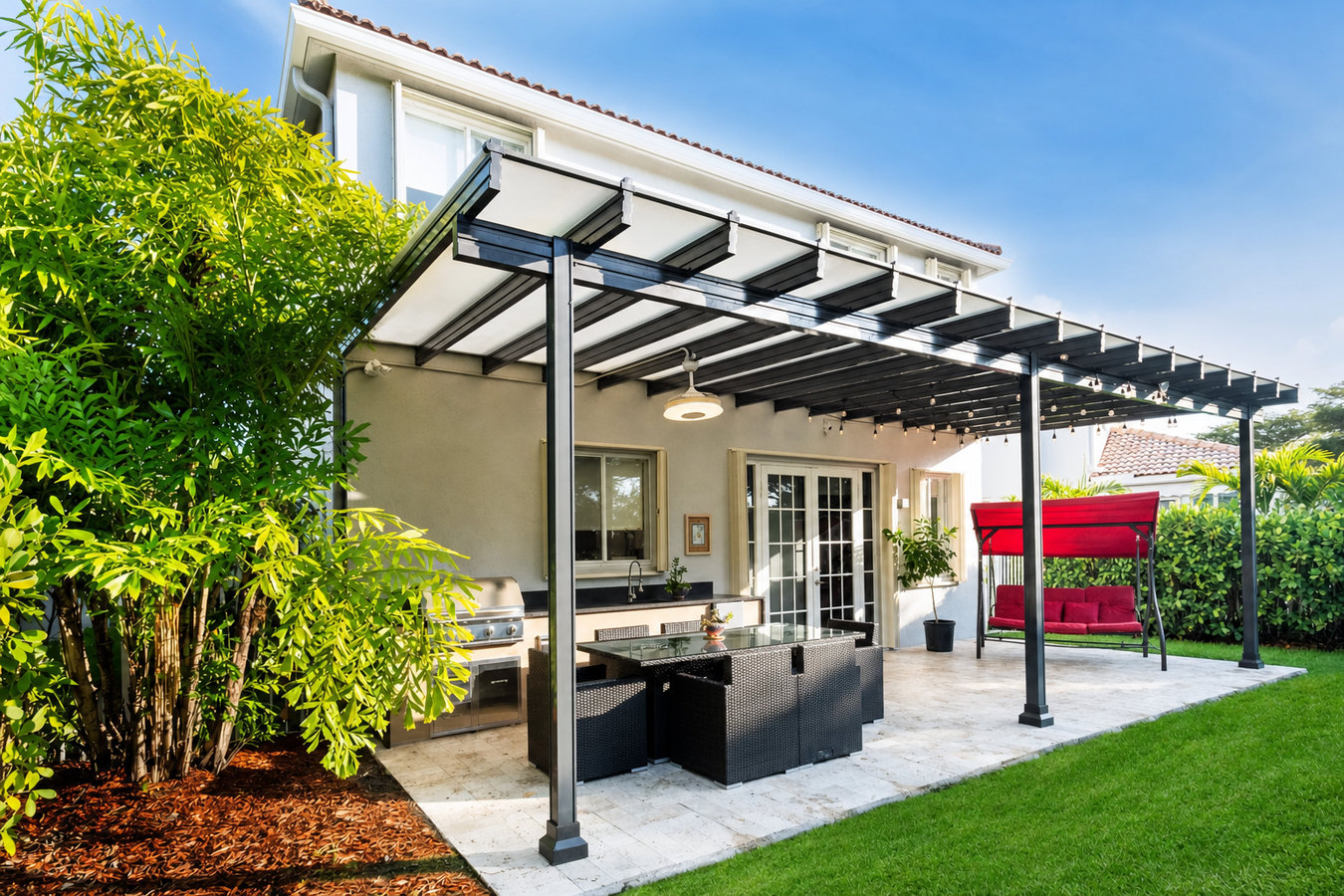
An uncovered patio in Tulare is unusable for most of the summer. A properly built patio cover gives you a shaded outdoor room you can use even on 105-degree afternoons.
Covered decks and patio covers in Tulare are permanent or semi-permanent roof structures built over an outdoor living area - they can attach to your house or stand on their own posts, and most projects take two days to two weeks of active construction depending on size and whether a new deck surface is being built underneath.
In Tulare, an uncovered patio is essentially off-limits from June through September. The combination of triple-digit heat and direct afternoon sun makes it genuinely uncomfortable - and expensive to deal with indoors, as your air conditioning fights heat that pours through west- and south-facing windows. A properly sized patio cover changes that equation. It shades the outdoor space and the windows behind it, and it creates a defined outdoor room you can furnish and actually use. If you want bug protection in addition to shade, we can combine this work with a screened-in porch or screened deck enclosure on the same project.
We build attached patio covers that connect to the side of your house and freestanding covers that stand on their own posts anywhere in your yard. Every permanent attached cover in Tulare requires a building permit, and we handle that process from application through city inspector sign-off. You will not have to make a single call to the city.
If your patio furniture bakes in the sun with no one using it from June through September, that is the clearest sign a cover would change how you use your home. In Tulare, where triple-digit days arrive in June and linger into September, an uncovered patio is a wasted asset for nearly half the year. A covered structure turns that space into somewhere your family can eat, relax, and spend time even on the hottest days.
If the flooring, furniture, or walls near your sliding glass door are fading, or if that part of the house gets noticeably hotter than the rest in summer, direct sun exposure is the culprit. A patio cover that extends far enough out from the house blocks afternoon sun before it reaches your windows and doors. Tulare homeowners with west- or south-facing rooms notice this problem most in July and August.
If you already have a patio cover and can see it bowing in the middle, notice gaps where it meets the house wall, or see rust streaks running down from the fasteners, the structure is failing. These visible signs mean the cover is no longer doing its job and may be a safety concern. A sagging or separating cover should be evaluated by a contractor before the next rainy season.
If you find yourself defaulting to indoor gatherings because your patio is too hot, too exposed, or too uncomfortable, that is a lifestyle signal worth acting on. A covered deck or patio area gives you a defined outdoor room - one that works for a weeknight dinner or a weekend gathering without asking guests to squint into the afternoon sun or bake in the heat.
We build attached patio covers that connect directly to your home's roofline or fascia, and freestanding covers that stand independently on posts in any part of your yard. Most Tulare homeowners choose an attached cover over an existing concrete slab - it is the most cost-effective option when the slab is in good shape and the roofline attachment point is straightforward. For homeowners who want to build a new deck surface at the same time, we do both as part of the same project. If you also want an open shade structure with a more decorative look, our pergola installation service is worth comparing - a pergola provides partial shade and a defined space, while a solid patio cover gives you full weather and sun protection.
Material choices matter significantly in Tulare's climate. Aluminum covers are the low-maintenance option - they hold up to UV and heat with no repainting, no resealing, and no rot. Wood-framed covers give you a warmer, more architectural look, but they require periodic sealing in this climate, especially given the combination of intense summer sun and the seasonal moisture from Tule fog winters. We walk through both options with you during the estimate so you can make an informed choice before anything is ordered.
Best for homeowners who want maximum durability with minimal maintenance - aluminum holds up to Central Valley heat and UV with no repainting or resealing.
Suits homeowners who want a natural, architectural look and are willing to apply a UV-resistant sealant every few years to maintain the finish.
Ideal for yards where the layout makes a house-attached cover impractical, or for homeowners who want covered outdoor space away from the main house wall.
Tulare sits in the southern San Joaquin Valley, where summer heat is relentless and an uncovered patio is genuinely unusable for four to five months of the year. A well-designed patio cover with the right roof pitch and ventilation can drop the temperature under the structure significantly, turning your backyard into a place you actually want to spend time. The return on investment here is higher than in cooler parts of California because you are not adding a seasonal amenity - you are adding an outdoor room that gets year-round use. Homeowners in Visalia face the same summer heat conditions and see the same consistent payoff from a covered outdoor space.
Material selection is also a local issue. The Central Valley's combination of intense UV, dry heat, and the temperature swings between summer days and winter nights is genuinely hard on wood finishes. Stains and sealants that last five to seven years on the coast may need reapplication every two to three years in Tulare. We factor that into every material recommendation - it is part of why we are direct about the maintenance requirements of wood covers versus the no-upkeep reality of aluminum. Permitting through the City of Tulare is required for any permanent attached structure, and we manage that process completely. For homeowners in Clovis and the broader Central Valley, the permit process and climate realities are consistent, and we bring the same organized approach to every project we build.
We reply within one business day to schedule an on-site visit. You describe the space - the size of your patio, whether you want an attached or freestanding cover, and what you are hoping to use it for. You do not need to have all the answers yet; just describe the problem you want to solve.
We come to your home, measure the space, look at your roofline or attachment point, and check how the afternoon sun hits your yard. We will look at things you might not think to mention - like whether the existing slab is level and whether there are overhead utilities to work around. You leave with a written estimate, not a ballpark range.
Once you approve the estimate and sign a contract, we submit the permit application to the City of Tulare Building Division. Processing typically takes one to three weeks. Materials are ordered during that window so the crew can start immediately once the permit is approved. You do not have to manage any of this.
The crew sets the frame, completes any electrical work for fans or lighting, and finishes the structure. A city building inspector verifies the work before the project is closed out. We do a final walkthrough with you, remove all debris, and hand you the permit paperwork for your home records.
Free written estimate. We handle the City of Tulare permit process and HOA review from start to finish.
(559) 837-6805We select materials and finishes specifically for Tulare's intense UV exposure and temperature swings, not whatever is cheapest or easiest to source. That distinction shows up over years, not days - a cover that looks great after one summer and starts failing after three is not a good investment. We are direct with you about what each material requires in terms of ongoing maintenance.
Every permanent attached patio cover in Tulare requires a building permit, and we handle the entire process - application, city communication, inspector scheduling, and final sign-off. The permit paperwork is handed to you at project close so your home records are clean. Unpermitted structures can create real problems when you sell, and we make sure that is never your situation.
A lot of Tulare homeowners have been burned by vague estimates that grew into much larger bills. We provide a written proposal that spells out exactly what is included, what it costs, and what the timeline looks like. If anything changes during the project, we discuss it with you before it affects the price. No surprises on the final invoice.
California law requires contractors doing structural work to hold an active license from the California Contractors State License Board. You can verify any contractor's license on the CSLB website in about two minutes - it tells you whether the license is active and whether complaints have been filed. Ask us for our license number before you sign anything. A legitimate contractor hands it over without hesitation.
We build patio covers that are designed for the climate you actually live in - not generic structures that happen to be installed in the Central Valley. Every project comes with a permit, clear paperwork, and materials that hold up over time.
An open pergola frame defines your outdoor space and provides partial shade with a more architectural look than a solid cover.
Learn MoreAdd mesh screening to a covered structure for full bug and debris protection alongside the shade a patio cover provides.
Learn MoreSummer project slots fill up fast in Tulare - reach out now for a free on-site estimate and get your build date locked in before peak season.